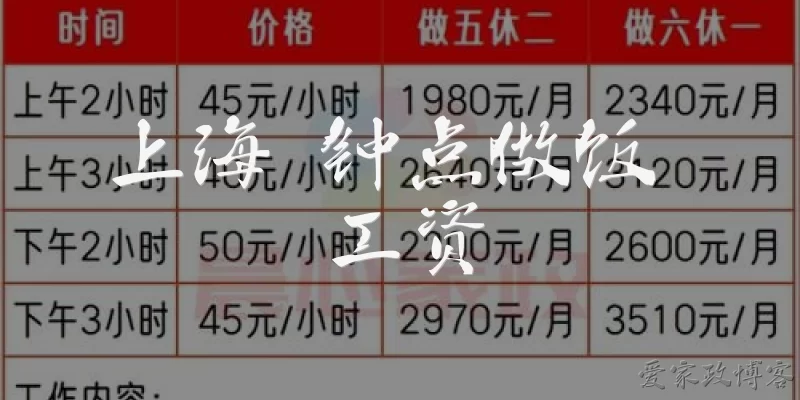
Shanghai hourly cooking wages:What is the average hourly cooking wage in Shanghai?
Q: What is the average hourly cooking wage in Shanghai?
A: The average hourly cooking wage in Shanghai typically ranges from 30 to 60 RMB (approximately $4.20 to $8.40 USD) for entry-level positions, while experienced chefs or specialized cooks can earn 80 to 150 RMB per hour or more. These figures vary significantly based on the type of establishment, cuisine specialty, and the cook's skill level. For example, a line cook in a casual restaurant might earn around 35-45 RMB per hour, whereas a dim sum chef in a high-end hotel could command 100-150 RMB hourly. Shanghai's high cost of living influences these rates, pushing them above the national average. Additionally, during peak seasons or for temporary event catering, wages may surge by 20-30%. It's important to note that many full-time cooking positions are salaried rather than hourly, so hourly rates are most common for part-time, freelance, or gig economy roles. When negotiating, consider that foreign chefs with international experience often earn premium rates, sometimes exceeding 200 RMB per hour.
Q: How do hourly cooking wages in Shanghai compare to other Chinese cities?
A: Shanghai's hourly cooking wages are among the highest in China, reflecting its status as a global financial hub with a higher cost of living. On average, Shanghai cooks earn 30-60 RMB per hour, compared to 20-40 RMB in Beijing, 15-30 RMB in Guangzhou, and 10-25 RMB in lower-tier cities like Chengdu or Wuhan. This premium is driven by Shanghai's concentration of luxury hotels, international restaurants, and a wealthy clientele willing to pay more for quality cuisine. Additionally, labor shortages in the culinary sector push wages up, especially for skilled positions like pastry chefs or sushi chefs. However, when adjusted for purchasing power, the gap narrows because Shanghai's rent and food costs are also significantly higher. For part-time or freelance cooks, Shanghai offers more opportunities for high-paying gigs, such as private dining events or pop-up restaurants. Still, competition is fierce, and many entry-level cooks struggle to secure hours that match the city's living expenses without additional income.
Q: What factors affect hourly cooking wages in Shanghai?
A: Several key factors influence hourly cooking wages in Shanghai. First, experience and skill level are paramount: a cook with 5+ years in a Michelin-starred kitchen can earn 100-200 RMB per hour, while a novice might make only 25-35 RMB. Second, cuisine type matters—specialized skills like French pastry, Japanese kaiseki, or regional Chinese cuisines (e.g., Cantonese dim sum) command higher rates than general cooking. Third, the establishment's prestige and location play a role: five-star hotels in Pudong or Bund-side restaurants pay more than neighborhood eateries. Fourth, certification from culinary schools (e.g., Le Cordon Bleu) or awards can boost wages by 20-50%. Fifth, language skills (English or Japanese) are valuable for serving expat clientele. Sixth, supply and demand: during holidays like Chinese New Year, wages can spike 30-50% due to labor shortages. Finally, legal factors such as work visas for foreign cooks and minimum wage laws (currently 24 RMB per hour in Shanghai) set a floor. Understanding these variables helps both employers and cooks negotiate fair rates.
Dialogue about
Common scenarios of "Shanghai hourly cooking wages"
【HR Manager】 Hi Li Wei, thanks for coming in. Let's discuss the hourly cooking wage for the position. What are your expectations?
【Li Wei】 Thank you. Based on my research, the average hourly rate for cooks in Shanghai is around 30 to 40 RMB. But I'd like to know your offer first.
【HR Manager】 Our standard rate for entry-level cooks is 25 RMB per hour. However, with your 3 years of experience, we could go up to 30 RMB.
【Li Wei】 I see. 30 RMB is a bit lower than I expected. I've seen listings offering 35 RMB for similar roles. Can you match that?
【HR Manager】 35 RMB is on the higher end. Let me check with our budget. For full-time, we might offer 32 RMB plus meal allowances. How does that sound?
【Li Wei】 32 RMB with meals is more reasonable. But I also need to consider transportation. Is there any transport subsidy?
【HR Manager】 We don't provide transport subsidy, but we do have a shuttle service from the nearest metro station. That could save you some costs.
【Li Wei】 That's helpful. What about overtime? Is it paid at 1.5 times the hourly rate?
【HR Manager】 Yes, overtime is 1.5x on weekdays and 2x on weekends. But we rarely require overtime.
【Li Wei】 Okay. And how many hours per week is the position? Full-time or part-time?
【HR Manager】 It's full-time, 40 hours per week, with two days off. But during peak seasons, we might ask for extra hours.
【Li Wei】 I understand. So if I work 40 hours at 32 RMB, that's 1280 RMB per week. Is that correct?
【HR Manager】 Yes, that's correct. Plus, we offer a quarterly performance bonus of up to 500 RMB based on your rating.
【Li Wei】 That's a nice incentive. What about annual leave and social insurance?
【HR Manager】 We provide standard social insurance and 5 days of paid annual leave after the first year. Also, we cover meals during shifts.
【Li Wei】 Alright. Can we negotiate the base rate to 33 RMB? That would make a big difference for me.
【HR Manager】 Let me see... I can offer 33 RMB if you commit to at least one year and are flexible with shifts.
【Li Wei】 I can commit to one year and I'm flexible with shifts. So 33 RMB per hour, plus meals and insurance. Deal?
【HR Manager】 Deal. We'll prepare the contract. When can you start?
【Li Wei】 I can start next Monday. Thank you for the opportunity.
【HR Manager】 Great! We'll send you the offer letter today. Welcome aboard!