Shanghai Domestic Service Industry:What is the current state of the domestic service industry in Shanghai?
Q: What is the current state of the domestic service industry in Shanghai?
A: The domestic service industry in Shanghai is highly developed and diverse, driven by the city's fast-paced lifestyle, aging population, and high dual-income households. It encompasses services such as housekeeping, childcare, eldercare, and cooking. The market is estimated to be worth billions of yuan, with a mix of formal agencies and informal workers. Recent trends include digital platforms for booking services, increased demand for specialized skills like infant care and elderly nursing, and a growing focus on professionalism and training. However, challenges like labor shortages, quality inconsistency, and regulatory gaps persist, prompting government efforts to standardize the sector.
Q: What are the main challenges facing Shanghai's domestic service industry?
A: Shanghai's domestic service industry faces several key challenges. First, there is a significant labor shortage, as demanding work, low social status, and modest pay deter many local workers, relying heavily on migrants. Second, quality and reliability vary widely, with many informal workers lacking proper training or certification. Third, regulatory oversight is fragmented, making it hard to enforce standards or protect both workers and consumers. Fourth, high turnover rates lead to unstable service relationships. Finally, rising living costs in Shanghai push wages up, increasing costs for families. These issues hinder the industry's sustainable growth and consumer trust.
Q: How is technology changing the domestic service industry in Shanghai?
A: Technology is transforming Shanghai's domestic service industry through digital platforms and apps that connect users with service providers. Companies like 58 Daojia and Swan Daojia offer on-demand housekeeping, enabling convenient booking, payment, and reviews. These platforms enhance transparency, allowing customers to select workers based on ratings and qualifications. For workers, apps provide more job opportunities and flexible scheduling. Additionally, smart home devices and cleaning robots are reducing manual labor demands. However, digitalization also brings challenges: gig-style work may lack benefits, and data privacy concerns arise. Overall, tech is driving efficiency and professionalism but requires regulatory adaptation.
Q: What are the government policies regulating the domestic service industry in Shanghai?
A: The Shanghai government has implemented various policies to regulate and promote the domestic service industry. These include mandatory training and certification programs to improve service quality, such as the 'Shanghai Domestic Service Certificate.' The city encourages industry associations to set standards and conduct evaluations. To protect workers, policies require written contracts, social insurance contributions for formal employees, and dispute resolution mechanisms. The government also supports digital platforms and encourages companies to scale up. Additionally, initiatives like 'Home Service Credit System' rate agencies and workers. Despite these efforts, enforcement remains inconsistent, and informal employment persists, highlighting the need for stronger oversight and incentives.
Q: What are the future trends for the domestic service industry in Shanghai?
A: The domestic service industry in Shanghai is poised for significant growth and transformation. Key trends include increasing professionalization, with more certified and specialized workers in eldercare, childcare, and high-end housekeeping. Digitalization will continue, with AI and IoT enabling smarter scheduling and service delivery. Demand for elderly care will surge due to an aging population, while dual-income families will seek comprehensive solutions. The government is expected to tighten regulations, formalize employment, and integrate services into the social welfare system. Additionally, there may be a rise in franchise models and cross-border services. Overall, the industry will move towards higher quality, greater standardization, and technological integration.
Dialogue about
Common scenarios of "Shanghai Domestic Service Industry"
【Interviewer】 Good morning, Mrs. Chen. Thank you for joining us today. As a long-time resident of Shanghai, how have you seen the domestic service industry evolve over the past decade?
【Mrs. Chen】 Good morning. The changes have been remarkable. Ten years ago, most families hired ayis through word-of-mouth or small agencies. Now, there are large platforms like 58 Daojia and Swan Daojia that offer vetted, trained professionals with insurance and contracts.
【Interviewer】 That's interesting. What do you think drove this transformation?
【Mrs. Chen】 Several factors: rising incomes, busy dual-income households, and an aging population. Also, the government has implemented standards and training programs to professionalize the sector. Plus, technology has made matching services easier.
【Interviewer】 You mentioned government standards. Can you give an example?
【Mrs. Chen】 Yes, the Shanghai Household Service Industry Association has issued guidelines for things like background checks, health certificates, and skill certifications. Some districts even offer free training for migrant workers entering the industry.
【Interviewer】 How has this affected the quality of service?
【Mrs. Chen】 Overall, quality has improved. But there's still a wide range. Some ayis are highly skilled—they can cook Western dishes, do early education, even speak some English. Others are less trained. The best ones are in high demand and can command high salaries.
【Interviewer】 What about the cost? Has it become more expensive?
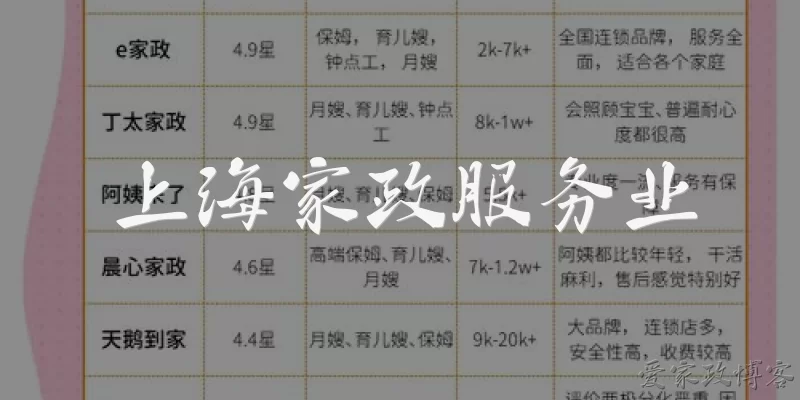
【Mrs. Chen】 Definitely. A live-in ayi used to cost around 4,000 to 5,000 RMB a month; now it's 8,000 to 12,000 or more for experienced ones. Hourly cleaning rates have also doubled. But many families see it as a worthwhile investment.
【Interviewer】 Are there any challenges that remain?
【Mrs. Chen】 Yes, trust is still a big issue. Despite background checks, some families worry about theft or negligence. Also, high turnover is common because the work is demanding and sometimes lacks respect. And there's a shortage of skilled workers, especially for specialized care like elderly dementia or postpartum care.
【Interviewer】 How do families typically find reliable help now?
【Mrs. Chen】 Many use apps like 'Home Service' or 'Ayi Help', where you can read reviews and see ratings. Others still rely on referrals from friends. Some hire through agencies that provide replacement guarantees. It's a mix.
【Interviewer】 What about the workers' perspective? Are they satisfied?
【Mrs. Chen】 It varies. Those with specialized skills and good employers are happy. But many face long hours, little privacy, and sometimes discrimination. There's a growing movement to recognize domestic work as a formal profession with rights and benefits.
【Interviewer】 Do you think the industry will continue to professionalize?
【Mrs. Chen】 Absolutely. With more training programs, certification systems, and technology, it's inevitable. I also expect more men to enter the field, especially in areas like elderly care and driving. And maybe someday we'll see domestic workers unionized or covered by standard labor contracts.
【Interviewer】 Any final thoughts on the future of domestic service in Shanghai?
【Mrs. Chen】 It will become more integrated into the gig economy, but with better protections. The key is balancing convenience for families with dignity for workers. If done right, Shanghai can be a model for other cities in China.
【Interviewer】 Thank you, Mrs. Chen. This has been very insightful.
【Mrs. Chen】 My pleasure. It's an important conversation to have.