Beijing Maternity Nurse Working Hours:What are the typical working hours for a maternity nurse in Beijing?
Q: What are the typical working hours for a maternity nurse in Beijing?
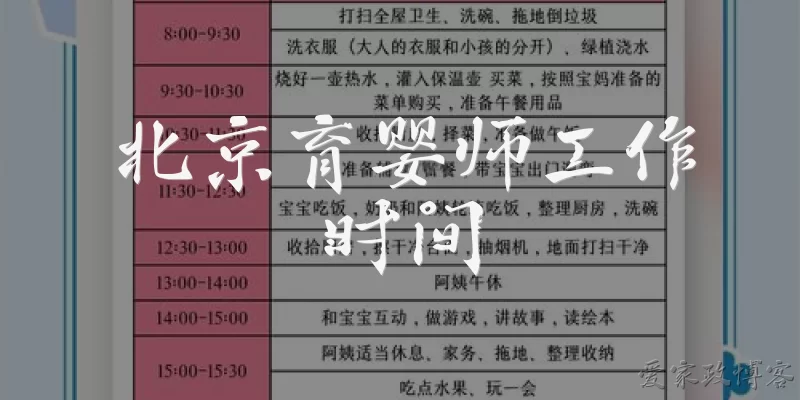
A: In Beijing, maternity nurses, often called yuesao, typically work long shifts to provide round-the-clock care for newborns and mothers. The most common arrangement is a 24-hour live-in schedule, where the nurse stays with the family for 26 to 28 consecutive days, with only a few hours of rest each day. Some families prefer a 12-hour shift during the day or night, but this is less common because newborns need constant attention. Standard working hours are not fixed by law, so they are usually negotiated between the family and the nurse. Most nurses work 10 to 12 hours of active care per day, plus being on call during the night. This intense schedule is why maternity nurses often command high salaries in Beijing.
Q: How many days per week does a Beijing maternity nurse usually work?
A: Beijing maternity nurses generally do not follow a standard five-day workweek. Instead, they work on a continuous basis for the duration of their contract, which is typically 26 days (sometimes 28 or 42 days). During this period, they are on duty every day with no full days off. However, many contracts include a provision for a few hours of personal time each day, usually in the afternoon when the baby sleeps. Some families offer one day off per week if the nurse is not live-in, but this is rare for yuesao. The live-in, 26-day model is the industry norm in Beijing, meaning the nurse works seven days a week for nearly a month before taking a break between assignments.
Q: Are there legal limits on maternity nurse working hours in Beijing?
A: Currently, there are no specific legal limits on working hours for maternity nurses in Beijing. The Chinese Labor Law sets standard working hours for employees, but yuesao are often classified as domestic workers or independent contractors, not regular employees. As a result, they are not covered by the same overtime and rest period regulations. Some agencies have internal policies, such as ensuring at least 6 hours of sleep per night, but these are not legally binding. The lack of regulation means working hours depend entirely on the contract between the nurse and the family. Many nurses work 16 to 18 hours of active duty per day, which has raised concerns about fatigue and quality of care. Advocacy groups are calling for clearer guidelines, but no formal laws have been enacted yet.
Q: What factors affect the working hours of a maternity nurse in Beijing?
A: Several factors influence a Beijing maternity nurse's working hours. First, the baby's feeding schedule: newborns eat every 2 to 3 hours, so night work is unavoidable. Second, the mother's recovery needs: if the mother had a C-section or complications, the nurse may need to provide more intensive care, extending hours. Third, family preferences: some families want the nurse to handle all night feedings, while others share duties, reducing the nurse's active hours. Fourth, the contract type: live-in nurses work around the clock, while part-time or shift nurses have set hours. Finally, agency policies: some agencies mandate maximum 12-hour shifts, but most yuesao work longer. The peak season, such as after the Chinese New Year, can also lead to longer hours due to high demand. These factors make working hours highly variable.
Words of experience
Common scenarios of "Beijing Maternity Nurse Working Hours"
【Client】 Hi, I'm interested in hiring a maternity nurse in Beijing. Could you tell me about the typical working hours?
【Agency Representative】 Hello! Our maternity nurses in Beijing usually work 26 days a month, with 24-hour on-duty. They stay with the family and are available day and night.
【Client】 24 hours? That sounds intense. Do they get any rest breaks during the day?
【Agency Representative】 Yes, they typically get about 4-6 hours of rest, usually taken in intervals when the baby is sleeping. But they need to be on call if the baby wakes up.
【Client】 So they don't have a fixed schedule? How do they manage sleep?
【Agency Representative】 They adapt to the baby's schedule. Most nurses sleep when the baby sleeps, and they coordinate with the mother for night feedings if needed.
【Client】 What about days off? Do they work every day for 26 days straight?
【Agency Representative】 Yes, typically they work 26 consecutive days and then have 4 days off. However, some clients prefer a different arrangement, like having the nurse take Sundays off, but that would extend the contract.
【Client】 I see. What if we need the nurse to work extra hours beyond the 26 days?
【Agency Representative】 Extra days are charged at a daily rate, usually around 400-600 RMB per day, depending on the nurse's experience.
【Client】 Is there a standard 8-hour shift option? I've heard some agencies offer that.
【Agency Representative】 Some agencies do offer 8-hour or 12-hour shifts, but they are less common. Most families prefer 24-hour care for newborns. But we can customize if you prefer.
【Client】 What are the advantages of 24-hour vs. 8-hour?
【Agency Representative】 24-hour care provides continuous support, especially for night feedings and emergencies. 8-hour shifts are cheaper but you'd need to handle nights yourself or hire multiple nurses.
【Client】 How do you ensure the nurse doesn't get too exhausted?
【Agency Representative】 We recommend families allow the nurse to nap during the day when the baby sleeps. Also, our nurses are trained to cope with the schedule, and we monitor their well-being.
【Client】 What about legal working hours? Are there any regulations?
【Agency Representative】 Maternity nurses are often classified as domestic workers, so labor laws are less strict. But we adhere to industry standards to ensure fair treatment.
【Client】 So the 26-day 24-hour model is the norm in Beijing?
【Agency Representative】 Yes, it's the most common. Some families opt for 42-day contracts, but the daily schedule remains similar. We can discuss your specific needs.